Showing posts with label Economy. Show all posts
February 15, 2019
South Korea to spend $16 billion in border areas with North Korea for next decade
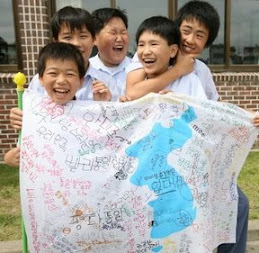
South Korea's government said on Feb 7 that it will spend 13.2 trillion won (S$15.9 billion) in border areas with North Korea for the next decade. The money, including 5.4 trillion won from the central government, 2.2 trillion won from local governments and 5.6 trillion won from the private sector each, will be spent on 225 projects in inter-Korea border areas by 2030.
The projects were aimed to establish foundation for inter-Korea exchange and cooperation, lay the groundwork for a balanced regional development, stimulate ecological peace tourism in border areas and expand social infrastructure, according to the Ministry of the Interior and Safety. READ MORE
October 26, 2018
Inter-Korean Natural Gas Pipelines Envisioned
Another positive development in the Korean Peninsula that will surely help in defusing tensions in the region, similar to the planned inter-Korean rail and road links, that may lead to the whole peninsula's direct linkage to the Eurasian landmass. READ MORE
March 23, 2011
North Korean Delegation in the U.S. to Learn Market System
An unusual North Korean delegation is visiting the U.S. -- an economic delegation to learn about Western market system. They landed in San Diego on an invitation from the Institute on Global Conflict and Cooperation at the University of California, San Diego, and will also visit New York City. It remains to be seen how the delegation will impact North Korea's economic planning or policies, but this shows that -- despite all the harsh rhetorics between North Korea and the U.S. -- that there are also channels of exchange and opportunities for interaction. Perhaps North Koreans and American hosts can wrap up the meetings with North Korean beer, which is now available in the U.S. with approval from the U.S. Treasury. (Photo: Korea Daily News)
February 11, 2011
Opposition to the Korea-US FTA Continues
The Obama administration, along with Lee Myung-bak administration of South Korea, is pushing for the ratification of the Korea-U.S. Free Trade Agreement (FTA) this year, despite vocal oppostion from both sides -- citizen groups and farmers in South Korea and labor and public-interest organizations in the U.S. such as the AFL-CIO. Economist Martin Hart-Landsberg takes a look at one of the component of the proposed FTA --the investment chapter-- in the following commentary from the Korea Policy Institute.Korea-U.S. Free Trade Agreement: The Investment Chapter
President Obama has said that the U.S. needs to compete more effectively for exports. That is why he is calling on Congress to ratify U.S. free trade agreements with Korea, Columbia, and Peru.
In the public back and forth about these free trade agreement most of the arguments are about whether the designated tariff reductions mandated by the agreements will produce jobs for U.S. workers. In fact, there is little reason to believe that they will. But, more importantly, little attention has been focused on the fact that these free trade agreements contain many chapters that have far reaching implications beyond employment numbers.
In fact, the U.S. free trade agreement with Korea includes 24 chapters. One of those chapters deals with investments. In broad brush, the investment chapter establishes broad limits on the ability of governments (at all levels) to regulate or interfere with private profit seeking investments by (foreign) corporations. See more.
November 6, 2010
G20 Meeting in South Korea: Dissent is Suppressed
South Korea will be hosting G20 meeting next week, which is a testimony to its rise as an economic powerhouse, yet another remarkable phenomenon of democratization in South Korea is being tainted with renewed political repression and curtailment of dissenting opinions by the current Lee Myung-bak administration. High security and mobilization of police force are understandable for this kind of high-profile events, but the government is overtly suppressing the voices of non-governmental organizations and concerned citizens -- both domestic and foreign -- who may have different views on global economical issues. The government went so far as disallowing Filipino NGO representatives to attend an NGO event in Seoul -- such a rash action is not a sign of a mature democracy.
December 4, 2009
Designer Jeans Made in North Korea

[Follow-up news: The store in Sweden abruptly reversed its decision to stock these jeans, saying it does not want to be "associated with a political issue" (or did they yield to political pressure?). The jeans are available online.]
In a surprise development, designer jeans will be sold in upscale stores in Sweden that have been manufactured in North Korea. The NoKo (a play on the abbreviation of North Korea) jeans are products of a joint venture between Swedish entrepreneurs and a North Korean firm (above photo shows the garment factory in North Korea making the jeans).
Besides the obvious buzz surrounding this peculiar development, what is really interesting is the motivation behind the Swedes. They were not big garment company executives looking for low wages, rather they started with a simple desire to get to know North Korea better (see their story on a video on their website) and the jeans idea (transmitted in an email to North Koreans) blossomed into a concrete project that may test the waters for more robust joint ventures with North Korea. The fact that North Korean authorities approved this venture with apparent novices suggest the willingness on the part of North Korea to try new economic ventures with the citizens of the outside world.
It also helped that Sweden and North Korea have diplomatic relations, as United Kingdom does, hence examples of joint ventures with North Korea coming out of these two European countries. It also supports an argument that economic engagement with North Korea may aid in reduction of tensions that North Korea has with the outside world. With diplomatic relations in place, there are many opportunities of multi-level contacts and exchanges between peoples and officials that may lead to better mutual understandings and a path towards reduction of tensions and animosities. On this end, the U.S. authorities need to heed, especially in light of the upcoming trip to North Korea by the special envoy Ambassador Stephen Bosworth next week.
November 18, 2009
"The Case of Economic Engagement with North Korea"
While the U.S. government and the media are preoccupied with the nuclear weapon issue in dealings with North Korea, there are other voices calling for alternative approaches, such as economic engagement, as the following summary from a recent report shows:An Asia Society/U.C.-Institute on Global Conflict and Cooperation Task Force Report focuses on economic engagement with North Korea as a peaceful means of inducing change in the DPRK. As the likelihood of some form of US-DPRK talks increases, this report proposes a fundamental rethinking of Washington’s approach toward the DPRK. Economic engagement, properly integrated into a system of sanctions, can transform North Korea into a country that can better provide for its people’s welfare and engage with other countries in a non-hostile manner. As the report shows, North Korea’s history of experiments with reform is limited, and domestic resistance to transition is formidable. But recent trends and tentative past efforts suggest some impulse toward reform and opening from within. North Korea should be actively engaged from the inside to encourage change in its domestic and foreign policy.
[Photo: As an indication of economic change in North Korea, a Western-style fast food restaurant recently opened in Pyongyang.]
October 28, 2009
Doing Business in North Korea
[Korea Report's 300th posting.]
In a respite from preoccupation with the North Korean nuclear/security issue, U.S. media is beginning to take notice of other issues, such as joint ventures and business interactions in North Korea, that shed some light on changes occuring within North Korea.
The CNN carried an interview with Hyun Jeong-eun, the chairwoman of South Korea's Hyundai Asan, which has pioneered inter-Korea joint ventures with investment of $272 million in North Korea, in projects like the Kaesong Industrial Park and tours to Mount Kumgang.
The Fortune magazine recently featured "The capitalist who loves North Korea," about Korean-American entrepreneur James Kim (photo, in front of his university in North Korea) who is fulfilling his dream of opening a Western-style university in North Korea that will offer classes similar to a MBA program.
In a respite from preoccupation with the North Korean nuclear/security issue, U.S. media is beginning to take notice of other issues, such as joint ventures and business interactions in North Korea, that shed some light on changes occuring within North Korea.The CNN carried an interview with Hyun Jeong-eun, the chairwoman of South Korea's Hyundai Asan, which has pioneered inter-Korea joint ventures with investment of $272 million in North Korea, in projects like the Kaesong Industrial Park and tours to Mount Kumgang.
The Fortune magazine recently featured "The capitalist who loves North Korea," about Korean-American entrepreneur James Kim (photo, in front of his university in North Korea) who is fulfilling his dream of opening a Western-style university in North Korea that will offer classes similar to a MBA program.
September 25, 2009
Goldman Sachs Study Sees Economic Gains in Korean Unification
An argument for Korean reunification, that economic gains can be achieved, comes from an unexpected source: the Goldman Sachs Group -- the famous and influential investment banking service group. Skeptics say that the cost of Korean reunification will be prohibitively high, but this study suggests that "a united South and North Korea could boast an economy larger than France, Germany and possibly Japan by the middle of the century."
September 23, 2009
Joint Ventures in North Korea
While the world is primarily preoccupied with the nuclear issue with North Korea and thinks that North Korea is sealed off from the outside world, there are those who argue that North Korea presents good investment and joint venture opportunities (coming from mostly Europeans, reflecting their inroads into North Korea with joint ventures and diplomatic presence, while the US and Japan lag behind). A British businessman residing in Pyongyang and operating joint ventures has this to say:The DPRK (North Korea) represents one of the last “green field” economies in the world with exceptional investment opportunities. As such it provides an unparalleled opportunity for business professionals who know and understand the risks, the people and the country. As estate agents are fond of saying it is a case of “location, location, location.”
[See more. The photo shows a groundbreaking ceremony of a joint venture in North Korea.]
July 21, 2009
Inter-Korea Joint Venture and Profit Transfer Amidst Tensions in Korea
Things may look bad between North Korea and South Korea/U.S. these days, but it seems business is doing well -- a South Korean firm doing a joint venture with North Korea selling cars in North Korea has made profit and was able to transfer the profit from North Korea to South Korea in U.S. dollars! The cars are made by Pyeonghwa Motors, affiliated with the Sun Myung Moon's Unification Church. It is ironic that staunch anti-communist Moon was able to broker a joint venture deal with North Korea and his company is making profit in North Korea, whereas the future of inter-Korea government-initiated, economic joint projects in Kaesong is uncertain.[Photo shows an advertisement for Pyeonghwa automobile sold in Pyongyang.]
February 24, 2009
China-South Korea Frictions on Joint Ventures
When U.S. companies dominated foreign company landscape in South Korea in the 80s, frictions sometimes arose between Korean workers and American management. The case of Pico, where an American boss fled Korea without paying back pay for his Korean workers, comes to mind. Now, as China has become South Korea's number one trading partner, frictions between Koreans and Chinese are surfacing, as indicated in this article in The New York Times about the Ssangyong auto company, with odd mixture of Chinese capital, labor unrest and technology transfer. [The photo from Reuters shows workers at Ssangyong protesting.]
February 1, 2009
Korean Economy: Advances and Challenges
A picture is indeed worth a thousand words. In this photo [from the chosun.com], a 86-year Korean man in a traditional attire of the bygone era uses a "made-in-Korea" camcorder to record the festivities of the celebration of the 400 year anniversary of the city of Gangneung. Within his lifetime, this man and his peers witnessed a remarkable and speedy transition of Korea from feudalism to modernity. When this man was born, Korea was predominantly an agarian society under the Japanese colonialism. From the ashes of the Korean War, both sides of Korea went full steam with industrialization programs. While North Korea's industrialization peaked in the 60s but languished since then, South Korea's export-driven modernization drive, though laden with societal inequities and labor strifes, kicked off in the 70s and South Korean economy is now in the league with other advanced economies. South Korea leads in shipbuilding, semiconductors, automobiles, consumer electronics, plasma televisions, mobile phones, robotics, and now, genetic engineering.
Despite the advancements in the South Korean economy however, pitfalls and challenges remain: financial upheavals tied to the global economic systems and trends, the plight of migrant and "irregular" workers, environmental degradation, income and wealth disparities, fierce competition in education and workplace, improper business practices overseas that exploit local labor, ambitious business plans overseas that are likened as "neocolonial," etc. Now, ethical questions arise, such as stemming from experimentation and progress in genetic engineering, as the recent news of cloning pets for profit suggest. The recent tragedy of the deaths of tenants stemming from forced eviction due to a redevelopment plan also shows the deadly side of the economic angst.
January 28, 2009
Madagascar To Become a Colony of South Korea?
With little arable land at home but with much cash, a South Korean firm tried to lease a hugh tract of farm land in Madagascar (roughly a half of the African island-state's arable land) to grow crops for export and consumption for Koreans. [Photo: Getty Images] But this proposal has been put on hold after the Malagasy people protested that it would make them a "South Korean colony" or a victim of "neo-colonialism." It doesn't help that the idea of a 99-year lease of the land in Madagascar sounds eerily similar to the 99-year lease on Hong Kong colony that the Great Britain extracted from China. This is ironic since Koreans harbor deep resentment and victimization of colonialism, from Japan, and so the land transaction idea should be dealt with caution and sensitivity to the Malagasy people.
January 23, 2009
"Lee Myung-bak Government is Worse Than Military Dictatorship of the 1980s"
Followup to: South Korea Regressing to a Police State? On Jan. 23, thousands of angry Korean citizens in Seoul gathered near the site of the tragedy (police raid on protesting, evicted tenants) that took six lives, despite the frigid cold and the lunar new year holidays, to protest the Lee Myung-bak government, calling for the removal of "murderous, thug government" (as seen in the photos by OhmyNews, article in Korean). Some protesters remarked that "South Korea is reverting to the 80s, turning worse than the period of then-military dictator Chun Doo-hwan, who did not dare kill squatters."
This development comes at a bad time for Lee Myung-bak, whose presidential campaign promise was the elevation of South Korea to more advanced economy status with high growth rate (7% growth), but has seen the South Korea economy deteriorate (negative 5.6 % growth) the most since the Asian financial crisis of 1997-98. This drop is due in part to the effects of global financial meltdown, but the Lee administration is criticized for mishandling economic policies in general, despite Lee's past experience as a CEO of major Korean firm. His change of Cabinet members has not helped. Moreover, his approval rating has dropped to 20 percent.
With so many sectors of Korean society criticizing the Lee government, there may be big scale anti-government protests -- likes of those seen during the military dictatorships in the 80s -- when the weather thaws.
January 12, 2009
A Blogger Is Arrested in South Korea: A Return to Repression?
Is the democratically-elected Lee Myung-bak government becoming a repressive government? Consider these recent developments:
-- The police has used excessive force in controlling the peaceful, candlelight protests against U.S. beef import during the summer of 2008.
-- The government has moved to restrict public assemblies and demonstrations with threats of arrests, even for baby-stroller-carrying moms (who were seen in great numbers during candlelight protests).
-- Press freedoms have been curtailed, as the government tries to make changes in the management of major broadcast media which amount to political interference, and trying to control television programs that are critical of the government.
-- Religious repression is cited by the Buddhists, who claim that the pro-Christian government (Lee Myung-bak is a Christian elder) is promoting hostility toward Buddhism.
-- The National Security Law, the draconian law that was used excessively and arbitrarily by past dictatorships to curtail the opposition and legitimate dissent, is being revived, as in the case of Chung Young-chul, a U.S. permanent resident who was arrested on charges of espionage for North Korea, based on his contacts with North Koreans at the U.N. Mission in NYC and "unauthorized" visits to North Korea -- which were no more than casual encounters and visits made by many South Koreans in the past decade under the official atmosphere of inter-Korea exchanges.
Now, a blogger has been arrested. The charge? Spreading false online information with a harmful intent that adversely impacted the financial landscape of Korea. The government must have been ired by the blogger's (aka "Minerva") dire forecasts for the Korean economy (most of which turned out to be true) and criticisms of Lee Myung-bak's economic policies. So, instead of addressing the economic turmoil in South Korea, Lee has the blogger detained and blames him for causing damages to the Korean economy.
This situation has made South Korea, the most wired nation in the world, a laughing stock of the world as observers see this as an infringement of the freedom of speech and an attempt to silence online dissent.
-- The police has used excessive force in controlling the peaceful, candlelight protests against U.S. beef import during the summer of 2008.-- The government has moved to restrict public assemblies and demonstrations with threats of arrests, even for baby-stroller-carrying moms (who were seen in great numbers during candlelight protests).
-- Press freedoms have been curtailed, as the government tries to make changes in the management of major broadcast media which amount to political interference, and trying to control television programs that are critical of the government.
-- Religious repression is cited by the Buddhists, who claim that the pro-Christian government (Lee Myung-bak is a Christian elder) is promoting hostility toward Buddhism.
-- The National Security Law, the draconian law that was used excessively and arbitrarily by past dictatorships to curtail the opposition and legitimate dissent, is being revived, as in the case of Chung Young-chul, a U.S. permanent resident who was arrested on charges of espionage for North Korea, based on his contacts with North Koreans at the U.N. Mission in NYC and "unauthorized" visits to North Korea -- which were no more than casual encounters and visits made by many South Koreans in the past decade under the official atmosphere of inter-Korea exchanges.
Now, a blogger has been arrested. The charge? Spreading false online information with a harmful intent that adversely impacted the financial landscape of Korea. The government must have been ired by the blogger's (aka "Minerva") dire forecasts for the Korean economy (most of which turned out to be true) and criticisms of Lee Myung-bak's economic policies. So, instead of addressing the economic turmoil in South Korea, Lee has the blogger detained and blames him for causing damages to the Korean economy.
This situation has made South Korea, the most wired nation in the world, a laughing stock of the world as observers see this as an infringement of the freedom of speech and an attempt to silence online dissent.
January 11, 2009
South Korea Becoming a Multiethnic Country?
Is this the new face of Korea? The photo from The Hankyoreh21 [in Korean] shows multiethnic students of the Asia Community School, an alternative school for the children of immigrants, migrant workers and Korean families.Koreans tend to take some "pride" in the homogeneity of the Korean society, but this is no longer the case. With the development of advanced economy and eager infusion of globalization in South Korea, the flow of foreign immigrants, migrant workers, and temporary workers has steadily increased over the past years, leading to 1.1 million foreigners now living in South Korea. Moreover, 10 percent of marriages in South Korea today involve non-Korean spouses (in the countryside, 40 percent of Korean men marry non-Koreans, mostly from Southeast Asia), leading to multiethnic/multinational offsprings.
These trends, coupled with low fertility rate for Koreans, are creating a multiethnic, multiracial and multicultural Korea. Today, it is common to see foreign immigrants appearing in Korean television shows and working in educational facilities (teaching English) or factories. In the countryside, a majority of students have multiethnic background.
Despite new opportunities for these immigrants and their children, however, they still face racial/ethnic prejudices, discriminations, and sometimes, abuses and human rights violations. According to Choi Hyunmo of Korea Migrant Workers Human Rights Center [in Korean], "Of the total number of immigrants in Korea, 500,000 are migrant workers, most working for low wages under harsh working conditions. The undocumented workers face additional hardships, exploitations, and a lack of social service support."
As immigrant population and international marriages in South Korea grow, the Korean society and government will need to address and redress these issues.
June 4, 2008
Crisis Mounts for Lee Myung-bak's Administration
Looks like President Lee Myung-bak got more than what he bargained for when he unilaterally offered to lift the US beef import ban when he visited Washington in April to entice the Congressional approval of the Korea-US Free Trade Agreement. What he didn't foresee was the massive public outcry and backlash of his action that spilled into the streets with tens of thousands -- mainly young middle school students -- protesting in candlelight protests, worried about public health problem of consuming US beef with the stigma of the potential mad cow disease.Now, Lee's approval rating has plummeted to a historic low (20 %) for sitting presidents, with his own conservative party baffled by Lee's actions, and the parliament paralized. South Korean citizens, who have elected Lee on the promise of prosperity and change, are now calling for his ouster already, angered by harsh tactics of police in suppressing the peaceful protests (see photo) and his continued disregard for consensus-building and public sentiments.
Moreover, the protests and outcry have moved beyond the beef issue to other unpopular initiatives and actions undertaken by the Lee administration in its first 100 days in office. As indicative of Lee's troubles and public sentiments, the ruling conservative party did not do well in the recent local elections. And although Lee has tried to yield to public pressure by asking the US to refrain from exporting beef from cattles that are older than 30 months, the public anger and protests have not subsided.
See related articles: Beef protests lead to larger crisis for new South Korean president, Public anger fuels anti-government rallies
May 30, 2008
US beef import ban is lifted, but protests continue
Followup to KR posting, Protests on US Beef Imports Widens in South Korea"South Korea's political opposition asked the Constitutional Court on Friday to block U.S. beef from entering the country after the government announced it would resume imports within days under an accord with Washington."
"US beef imports set to resume in SKorea but finding it in stores may prove difficult"
Even those attending a hip-hop breaking competition in Seoul noticed the street protests:
In Korea, Breaking & Beef, Hip-Hop & Free Trade
May 21, 2008
"Pyongyang Soju" Has Landed in the US
Soju (Korean liquor) that is "Made in DPRK" is now available for consumption in the US. Although this soju will likely be consumed mainly by Koreans in the US in Korean restaurants (it is available already in South Korea), it will also be available to ordinary Americans in liquor stores. It will cost more than comparative South Korean sojus sold in the US due to high US tariffs imposed on North Korean goods because the US does not have "normal trade relations"with North Korea, in addition to restrictive trade sanctions. Those restrictions under the Trading with the Enemy Act may be lifted soon as the result of the six-nation process of nuclear disarmament and normalization of relations (mainly between Washington and Pyongyang). So the Pyongyang soju may be a sign of more things to come in US-DPRK relations.
Subscribe to:
Posts (Atom)